
Case Study: A $12,000 ACL Surgery and How Insurance Covered It


Case Study: A $12,000 ACL Surgery and How Insurance Covered It
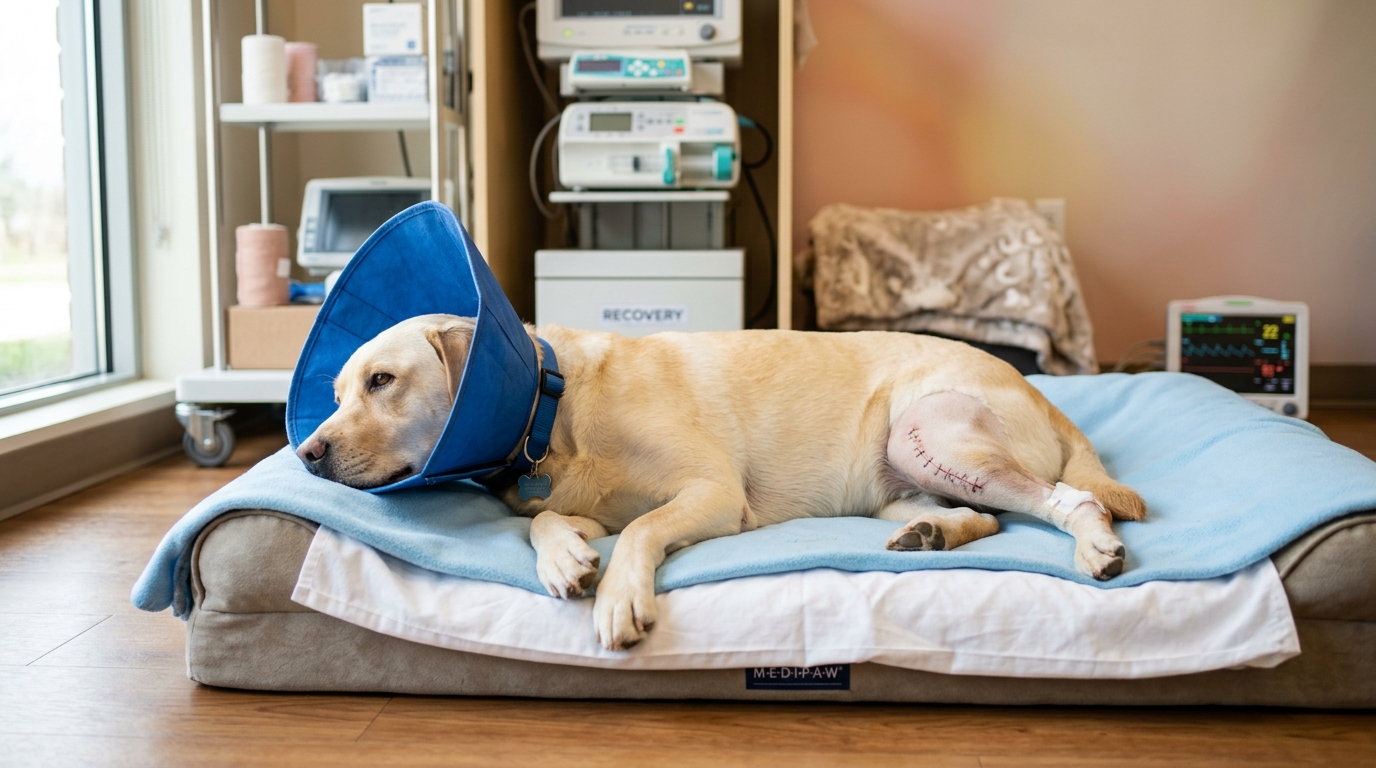
When Maya, a 6-year-old Labrador Retriever, suddenly stopped putting weight on her right hind leg during a game of fetch, her owners assumed it was a minor sprain. Three days later, they were sitting in a veterinary surgical specialist's office staring down a $12,000 estimate for TPLO surgery — the gold-standard treatment for a torn cranial cruciate ligament (the canine equivalent of a human ACL).
This is the story of how that bill got paid, what the actual reimbursement looked like, and what every dog owner should understand about ACL injuries before they happen.
The Injury: What Happened to Maya
Cranial cruciate ligament (CCL) rupture is the most common orthopedic injury in dogs. According to the American College of Veterinary Surgeons, it affects more than 600,000 dogs in the U.S. every year, and breeds like Labradors, Rottweilers, Newfoundlands, and Golden Retrievers are genetically predisposed to it.
Maya's owners noticed three classic signs:
- Sudden lameness in a hind leg after activity
- Difficulty rising from a lying position
- A "sit test" failure — Maya extended her affected leg out to the side rather than tucking it under
The orthopedic specialist confirmed a complete CCL rupture with mild meniscal damage. Surgery was strongly recommended, and waiting risked accelerated arthritis and a 40–60% chance of the opposite knee tearing within 12–18 months.
The Estimate: Breaking Down a $12,000 ACL Surgery
Maya's family was shocked at the cost. But when the line items came in, it became clear how quickly orthopedic care adds up. Here's a breakdown representative of TPLO (Tibial Plateau Leveling Osteotomy) surgery at a specialty hospital in a major metro area:
| Service | Cost |
|---|---|
| Initial orthopedic consultation | $285 |
| Pre-surgical bloodwork & imaging | $640 |
| Sedated radiographs (TPLO planning) | $475 |
| TPLO surgical procedure | $6,800 |
| Surgical implants (plate, screws) | $1,250 |
| Anesthesia & monitoring | $890 |
| Hospitalization (2 nights) | $720 |
| Pain management & medications | $310 |
| Post-op rechecks (2 visits) | $340 |
| Rehabilitation therapy (8 sessions) | $480 |
| Total | $12,190 |
The dog ACL surgery cost varies widely. A simpler extracapsular repair on a small dog might run $1,500–$3,000, while bilateral TPLOs at a top specialty center can exceed $15,000. Maya's case fell in the higher range due to her size, the surgical technique chosen, and the urban specialty pricing.
The Insurance Side: How Coverage Actually Worked
Maya was enrolled in an accident and illness policy with the following parameters:
- Annual deductible: $500
- Reimbursement rate: 90%
- Annual coverage limit: $15,000
- Waiting periods: Already satisfied (she'd been enrolled for 14 months)
- Pre-existing conditions: None — Maya had no prior knee issues documented
Critically, because Maya's CCL injury occurred after her policy's orthopedic waiting period had passed, the entire treatment was eligible for reimbursement. (Many TPLO surgery insurance claims are denied because owners enroll after the injury or during a waiting period — timing matters enormously.)
The Reimbursement Math
| Step | Amount |
|---|---|
| Total eligible vet bill | $12,190 |
| Less: Annual deductible | – $500 |
| Reimbursable amount | $11,690 |
| Multiplied by reimbursement rate (90%) | $10,521 |
| Final reimbursement to owner | $10,521 |
| Out-of-pocket cost to family | $1,669 |
Without insurance, Maya's family would have paid the full $12,190. With coverage in place, their net cost was about 14% of the total bill — and they didn't have to choose between their dog's mobility and their household budget.
Why ACL Injuries Are So Expensive
The torn ligament dog cost reflects three realities of modern veterinary orthopedics:
- Specialty surgical training: Board-certified veterinary surgeons spend 4+ years in residency after vet school. Their expertise commands specialty pricing.
- Implant costs: TPLO plates, screws, and surgical kits are precision medical devices with the same supply chain as human orthopedic hardware.
- Aftercare is non-negotiable: Skipping rehabilitation or recheck radiographs significantly increases complication rates. The "true" cost of a successful outcome includes everything through week 16.
It's also worth knowing that 40–60% of dogs who tear one CCL will eventually tear the other one, according to research published by Veterinary Surgery journal. For a Lab like Maya, that means her family may face a second surgery in the next year or two — making continued insurance coverage especially important.
Lessons From Maya's Case
If you take three things away from this case study, make them these:
1. Enroll Before You Need It
The single most common reason ACL claims get denied is that the injury (or even the symptoms of injury, like intermittent limping) showed up before the policy started. Once a knee problem is in the medical record, it becomes a pre-existing condition for any new policy.
2. Understand Your Policy's Orthopedic Waiting Period
Some insurers apply a standard 14-day waiting period to all illnesses including orthopedic conditions. Others impose a longer 6-month waiting period specifically for cruciate and joint issues. We at PetPremium recommend reading this section carefully before assuming you're covered.
3. Know What "Bilateral Exclusion" Means
If your dog tore a CCL before coverage began, most insurers will exclude not just that knee but the opposite knee too, treating bilateral cruciate disease as one condition. Maya was protected only because she had no prior history on either side.
What This Means for Your Dog
If you own a breed predisposed to cruciate disease — Labradors, Goldens, Rottweilers, Newfoundlands, Saint Bernards, Bulldogs, or any large active dog — the question is rarely if you'll deal with knee issues, but when. Pairing a high-quality preventive routine (lean body weight, regular controlled exercise, joint supplements where appropriate) with insurance coverage in place before symptoms appear is the most reliable way to protect both your pet and your finances.
For broader context on emergency costs, our reference guide on the Average Cost of Common Pet Emergencies in 2026 can help you benchmark what to expect across other common scenarios.
Frequently Asked Questions
Q: How much does TPLO surgery for a dog typically cost in 2026?
TPLO surgery generally ranges from $4,500 to $7,500 per knee at most specialty hospitals, with total treatment costs (including diagnostics, hospitalization, medications, and rehab) commonly landing between $5,500 and $12,500. Urban areas, board-certified surgeons, and larger dogs push costs toward the higher end.
Q: Does pet insurance cover ACL or CCL surgery?
Yes, most accident and illness pet insurance policies cover cruciate ligament surgery — provided the injury occurs after enrollment and after any applicable orthopedic waiting period. Pre-existing knee issues, including limping documented before enrollment, are typically excluded.
Q: What's the difference between TPLO and a traditional ACL repair?
TPLO (Tibial Plateau Leveling Osteotomy) reshapes the knee's biomechanics with a metal plate and screws, eliminating the need for the torn ligament. Traditional extracapsular repair uses a suture to mimic the ligament's function. TPLO generally yields better outcomes for dogs over 50 pounds but costs more and requires specialty surgical expertise.
Q: Can a torn ACL in a dog heal without surgery?
In most medium and large dogs, no — the canine knee depends so heavily on the cruciate ligament for stability that non-surgical management leads to progressive arthritis and reduced mobility. Conservative management (rest, weight control, anti-inflammatories, bracing) may be appropriate for very small dogs or those who aren't surgical candidates due to age or other health conditions.
Q: Will my dog need surgery on the other knee too?
Studies suggest 40–60% of dogs who tear one cruciate ligament will tear the opposite one, often within 12–18 months. This is one reason maintaining insurance coverage after a first surgery is so important — the second knee remains insurable as long as it hasn't yet shown symptoms.
Q: Does PetPremium cover orthopedic conditions like torn ACLs?
Pet insurance plans available through PetPremium include coverage for accidents and illnesses, which typically encompasses cruciate ligament injuries and TPLO surgery, subject to standard waiting periods and pre-existing condition rules. We recommend getting a personalized quote and reviewing the specific plan terms to understand orthopedic coverage details before enrollment.
Q: How long is the recovery after TPLO surgery?
Full recovery from TPLO surgery typically takes 12–16 weeks, with strict activity restriction for the first 8 weeks followed by a gradual return to normal exercise. Most dogs are bearing weight on the leg within 24–48 hours, and rehabilitation therapy can meaningfully accelerate the return to athletic function.
Q: What are early warning signs of a partial ACL tear in dogs?
Watch for intermittent hind-leg limping (especially after exercise), difficulty rising, reluctance to jump, sitting with the affected leg extended to the side ("positive sit test"), and visible thickening on the inside of the knee. Catching a partial tear early gives you more treatment options and a better long-term prognosis.
