
Juvenile Pubic Symphysiodesis (JPS) for Canine Hip Dysplasia: Cost Breakdown and Insurance Reimbursement Examples


Juvenile Pubic Symphysiodesis (JPS) for Canine Hip Dysplasia: Cost Breakdown and Insurance Reimbursement Examples
Hip dysplasia is one of the most common orthopedic conditions in dogs, affecting an estimated 15-20% of large-breed puppies — and far more in predisposed breeds like Golden Retrievers, German Shepherds, Labradors, and Bernese Mountain Dogs. While most owners hear about Total Hip Replacement (THR) or Femoral Head Ostectomy (FHO) as treatment options, there's a less-discussed surgery that can actually prevent the worst outcomes if caught early enough: Juvenile Pubic Symphysiodesis (JPS).
JPS is a small, time-sensitive procedure that has saved thousands of dogs from a lifetime of arthritis — and saved their owners tens of thousands in downstream surgical bills. In this case study, we'll break down what JPS costs, walk through real-world claim reimbursement examples, and explain how pet insurance factors into the math.
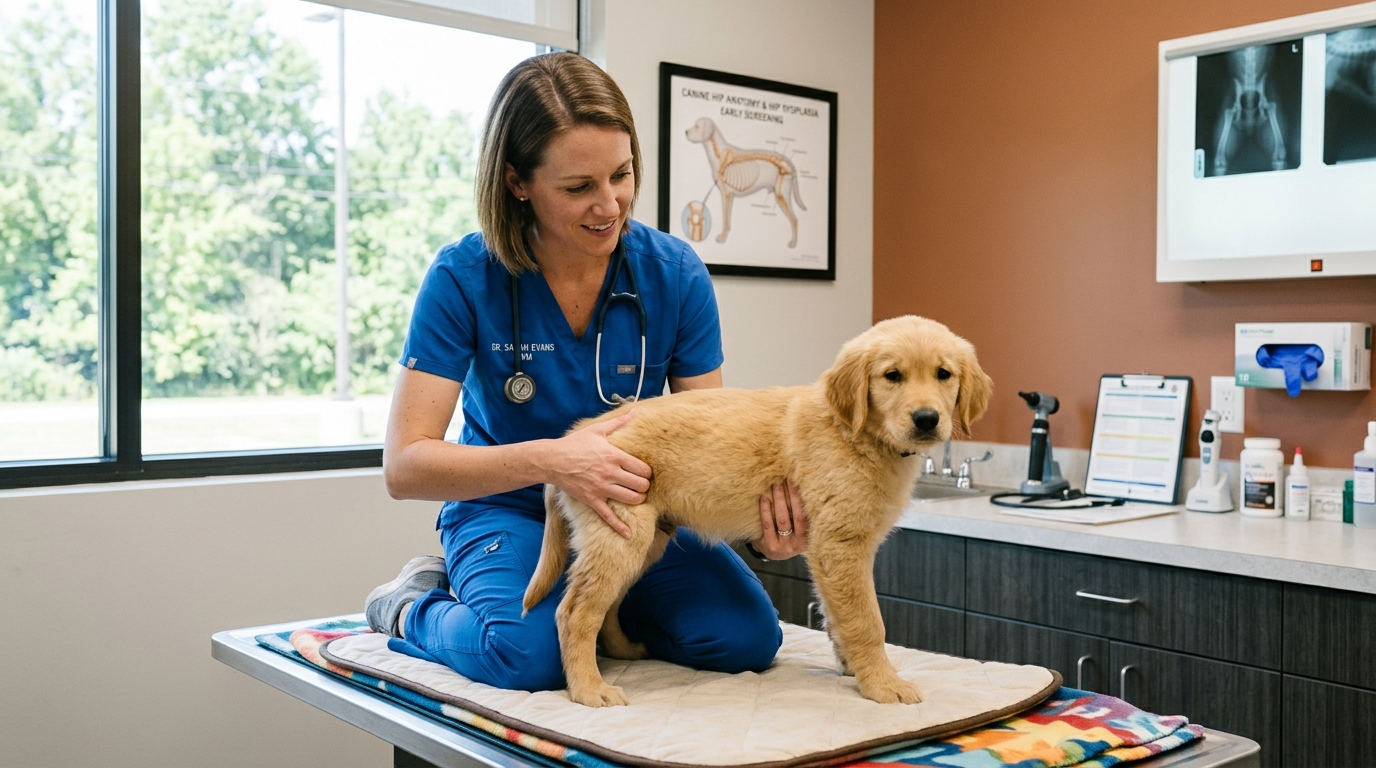
What Is Juvenile Pubic Symphysiodesis (JPS)?
JPS is a minimally invasive surgical procedure performed on puppies between 14 and 20 weeks of age (ideally 14-16 weeks) who show early signs of hip laxity. The surgeon uses electrocautery to fuse the pubic symphysis — the cartilage seam at the bottom of the pelvis. As the puppy grows, the rest of the pelvis continues to develop normally, but the fused symphysis forces the hip sockets (acetabula) to rotate outward, deepening their grip on the femoral heads.
The result: a tighter, more stable hip joint at maturity, and dramatically reduced risk of arthritis and clinical hip dysplasia later in life.
The catch? It only works if performed before 20 weeks of age. After that window closes, the procedure offers no benefit — and the dog will require more invasive (and more expensive) surgery if dysplasia progresses.
Who Is a Candidate?
Veterinary surgeons typically recommend JPS for puppies who:
- Belong to a high-risk breed (Labradors, Goldens, German Shepherds, Rottweilers, Bernese Mountain Dogs, Saint Bernards)
- Show a distraction index (DI) of 0.3 or greater on PennHIP evaluation
- Have palpable hip laxity on Ortolani sign exam
- Are still within the 14-20 week age window
Because timing is so critical, we at PetPremium strongly recommend that owners of at-risk breeds schedule a PennHIP or OFA preliminary screening between 12 and 14 weeks of age.
JPS Cost Breakdown
Compared to Total Hip Replacement (THR) or Triple Pelvic Osteotomy (TPO), JPS is remarkably affordable. Here's a typical cost breakdown in the United States as of 2026:
| Cost Component | Typical Range |
|---|---|
| Initial vet exam and consultation | $75 – $200 |
| PennHIP evaluation (sedation + radiographs) | $300 – $600 |
| Pre-surgical bloodwork | $150 – $250 |
| JPS surgery (procedure + anesthesia) | $1,200 – $2,500 |
| Hospitalization (typically same-day) | $200 – $400 |
| Post-op medications (NSAIDs, antibiotics) | $80 – $150 |
| Follow-up exams and recheck radiographs | $150 – $400 |
| Total estimated cost | $2,155 – $4,500 |
Costs vary significantly by region. Urban specialty hospitals in California, New York, or the Pacific Northwest routinely charge at the higher end, while rural or university teaching hospitals may fall well below the lower bound.
Comparing JPS to Later-Stage Surgical Alternatives
The real value of JPS becomes clear when you compare it to what owners pay if hip dysplasia progresses untreated:
| Procedure | Typical Cost (Per Hip) | Best Age Window |
|---|---|---|
| JPS (preventive) | $1,200 – $2,500 | 14-20 weeks |
| Triple Pelvic Osteotomy (TPO) | $3,000 – $5,000 | 5-10 months |
| Femoral Head Ostectomy (FHO) | $2,500 – $5,500 | Any age |
| Total Hip Replacement (THR) | $7,000 – $12,000 | 9+ months |
A bilateral THR (both hips) can run $14,000-$24,000 — and that's before factoring in physical therapy, lifelong joint supplements, and arthritis management. For a high-risk breed, the case for catching laxity early and pursuing JPS is overwhelming, both medically and financially.
Real-World Insurance Reimbursement Examples
Here's where pet insurance becomes essential. Because hip dysplasia is a hereditary condition, coverage depends on three things: (1) whether your policy covers hereditary conditions, (2) whether the issue was identified before enrollment, and (3) your specific reimbursement percentage and deductible.
Below are three anonymized claim scenarios that illustrate how reimbursement typically plays out.
Case Study 1: Bailey, 15-Week-Old Labrador Retriever
- Location: Suburban Ohio
- Policy: 90% reimbursement, $250 annual deductible, $10,000 annual limit
- Enrolled at: 9 weeks (well before any symptoms)
| Charge | Amount |
|---|---|
| PennHIP screening | $475 |
| Pre-op bloodwork | $185 |
| JPS surgery (bilateral) | $2,100 |
| Medications + recheck | $215 |
| Total invoice | $2,975 |
Reimbursement calculation:
- Covered expenses: $2,975
- Minus deductible: -$250
- Eligible amount: $2,725
- Reimbursement at 90%: $2,452.50
- Owner's out-of-pocket: $522.50
Case Study 2: Duke, 17-Week-Old Bernese Mountain Dog
- Location: Denver, Colorado
- Policy: 80% reimbursement, $500 annual deductible, $5,000 annual limit
- Enrolled at: 10 weeks
| Charge | Amount |
|---|---|
| Specialist consult + Ortolani exam | $225 |
| PennHIP + OFA prelim radiographs | $610 |
| JPS surgery | $2,450 |
| Hospitalization | $375 |
| Post-op care | $290 |
| Total invoice | $3,950 |
Reimbursement calculation:
- Covered expenses: $3,950
- Minus deductible: -$500
- Eligible amount: $3,450
- Reimbursement at 80%: $2,760
- Owner's out-of-pocket: $1,190
Case Study 3: Luna, 16-Week-Old Golden Retriever
- Location: Austin, Texas
- Policy: 70% reimbursement, $750 annual deductible, unlimited annual
- Enrolled at: 12 weeks
| Charge | Amount |
|---|---|
| PennHIP evaluation | $525 |
| JPS surgery + anesthesia | $1,850 |
| Medications and follow-up | $310 |
| Total invoice | $2,685 |
Reimbursement calculation:
- Covered expenses: $2,685
- Minus deductible: -$750
- Eligible amount: $1,935
- Reimbursement at 70%: $1,354.50
- Owner's out-of-pocket: $1,330.50
Key Insurance Considerations for JPS
JPS sits at an interesting intersection of preventive and treatment surgery, and that creates a few coverage nuances every owner should understand:
1. Enroll before screening. This is the single most important rule. If a PennHIP exam reveals hip laxity before you enroll in insurance, hip dysplasia will be considered a pre-existing condition and excluded from coverage. We at PetPremium recommend enrolling within the first 8-10 weeks of bringing a puppy home — before any orthopedic screening occurs.
2. Confirm hereditary condition coverage. Not every plan covers hereditary or congenital conditions. Hip dysplasia falls squarely in this category. Always verify that your policy includes hereditary conditions with no separate sub-limit. For a deeper plan-by-plan comparison, see our guide on whether pet insurance covers hereditary conditions.
3. Watch for breed-specific exclusions. A small number of insurers exclude certain orthopedic conditions for high-risk breeds, or impose waiting periods of 6-12 months for hip-related claims. Read the policy fine print carefully before assuming coverage.
4. Diagnostic vs. surgical coverage. Some plans cover the JPS surgery itself but not the diagnostic PennHIP screening that justifies it. Others bundle them together. PetPremium-partnered plans typically reimburse both as part of a covered illness episode.
5. Waiting periods matter. Most policies impose a 14-30 day waiting period for illness coverage and an additional 6-month waiting period for orthopedic conditions. Because the JPS window closes at 20 weeks, you must enroll very early in puppyhood for orthopedic waiting periods to be cleared in time.
Why Early Action Pays Off
The economics of JPS are unusually clear. A puppy who receives JPS at 16 weeks has an excellent chance of reaching adulthood with functional, arthritis-free hips. A puppy who misses the window may face TPO at 6 months ($6,000-$10,000 bilateral), THR at 12 months ($14,000-$24,000 bilateral), or a lifetime of pain management running $1,500-$3,000 per year.
For high-risk breeds, the math nearly always favors early screening — and pet insurance is what makes early screening financially feasible for most families. Even with a 70% reimbursement plan, owners walk away from JPS having spent roughly the cost of a single emergency vet visit to potentially prevent five-figure surgeries down the road.
If you're bringing home a Lab, Golden, German Shepherd, Bernese, or any other large breed in the coming months, the time to plan is before the puppy comes home. Schedule a PennHIP appointment for week 14, and have insurance in place well before then.
Frequently Asked Questions
Q: What is the success rate of Juvenile Pubic Symphysiodesis?
When performed within the optimal 14-16 week window on appropriate candidates, JPS has a published success rate of 70-85% in producing clinically normal hips at maturity, according to studies from the American College of Veterinary Surgeons. Success drops sharply if the procedure is performed after 18 weeks, which is why early screening is so critical.
Q: Is JPS surgery painful for puppies?
JPS is considered a relatively minor procedure with a short recovery period. Most puppies are back to normal activity within 7-14 days, though strict leash-walk restrictions are typically required for 4-6 weeks. Pain is well-controlled with NSAIDs and the small incision (about 1-2 inches) heals quickly compared to TPO or THR.
Q: Does pet insurance cover JPS if it's considered preventive?
This is one of the most common questions we receive. JPS is not classified as preventive care because it treats an existing pathology (hip laxity confirmed by PennHIP). It's a covered surgical treatment under most pet insurance plans that include hereditary condition coverage — assuming the laxity was diagnosed after policy enrollment.
Q: Can JPS be performed on only one hip?
Yes, but it's uncommon. JPS is almost always performed bilaterally because hip dysplasia rarely affects only one side, and the symphysiodesis effect requires fusion across the full pubic seam. Performing it unilaterally would not produce the rotational change in the acetabulum needed to deepen the hip sockets.
Q: Does PetPremium cover hip dysplasia surgeries like JPS, TPO, or THR?
PetPremium-partnered plans generally cover hereditary orthopedic conditions including hip dysplasia, provided the condition was not diagnosed or symptomatic before enrollment. Coverage extends to diagnostic imaging, surgical treatment (JPS, TPO, FHO, or THR), medications, and rehabilitation. Specific reimbursement percentages, deductibles, and waiting periods vary by plan — visit petpremium.com to compare options for your breed.
Q: How early should I get my puppy screened for hip dysplasia?
For at-risk breeds, schedule a preliminary PennHIP evaluation between 12 and 14 weeks of age. This timing allows for diagnosis early enough that JPS remains an option if needed. Waiting until 6 months — when many owners think to ask about hips — closes the JPS window permanently and limits options to more invasive surgeries.
Q: What breeds benefit most from JPS screening?
The breeds with the highest documented incidence of hip dysplasia include Bulldogs, Pugs, Saint Bernards, Bernese Mountain Dogs, Newfoundlands, Rottweilers, German Shepherds, Golden Retrievers, Labradors, and Old English Sheepdogs. Mixed breeds with large-breed parentage are also strong candidates for early screening.
Q: How much does pet insurance for a hip dysplasia-prone puppy typically cost?
Premiums for puppies of large, high-risk breeds typically range from $45-$90 per month for comprehensive coverage with hereditary condition inclusion. Premiums vary based on zip code, deductible, reimbursement percentage, and annual limit. The earlier you enroll, the lower your starting premium and the broader the conditions you can cover before any pre-existing exclusions apply.
