
Total Hip Replacement (THR) for Canine Hip Dysplasia: Cost Breakdown and Insurance Reimbursement Examples


Total Hip Replacement (THR) for Canine Hip Dysplasia: Cost Breakdown and Insurance Reimbursement Examples
Hip dysplasia is one of the most common — and costly — orthopedic conditions affecting dogs in the United States. For severe cases where conservative management has failed, Total Hip Replacement (THR) is widely considered the gold-standard surgical solution. But the price tag can leave even prepared pet parents stunned: a single hip can cost more than a used car.
In this case-study breakdown, we at PetPremium walk through real-world cost ranges for THR in 2026, three anonymized claim examples showing what insurance actually reimburses, and how to evaluate coverage before your dog ever limps into the orthopedic specialist's office.
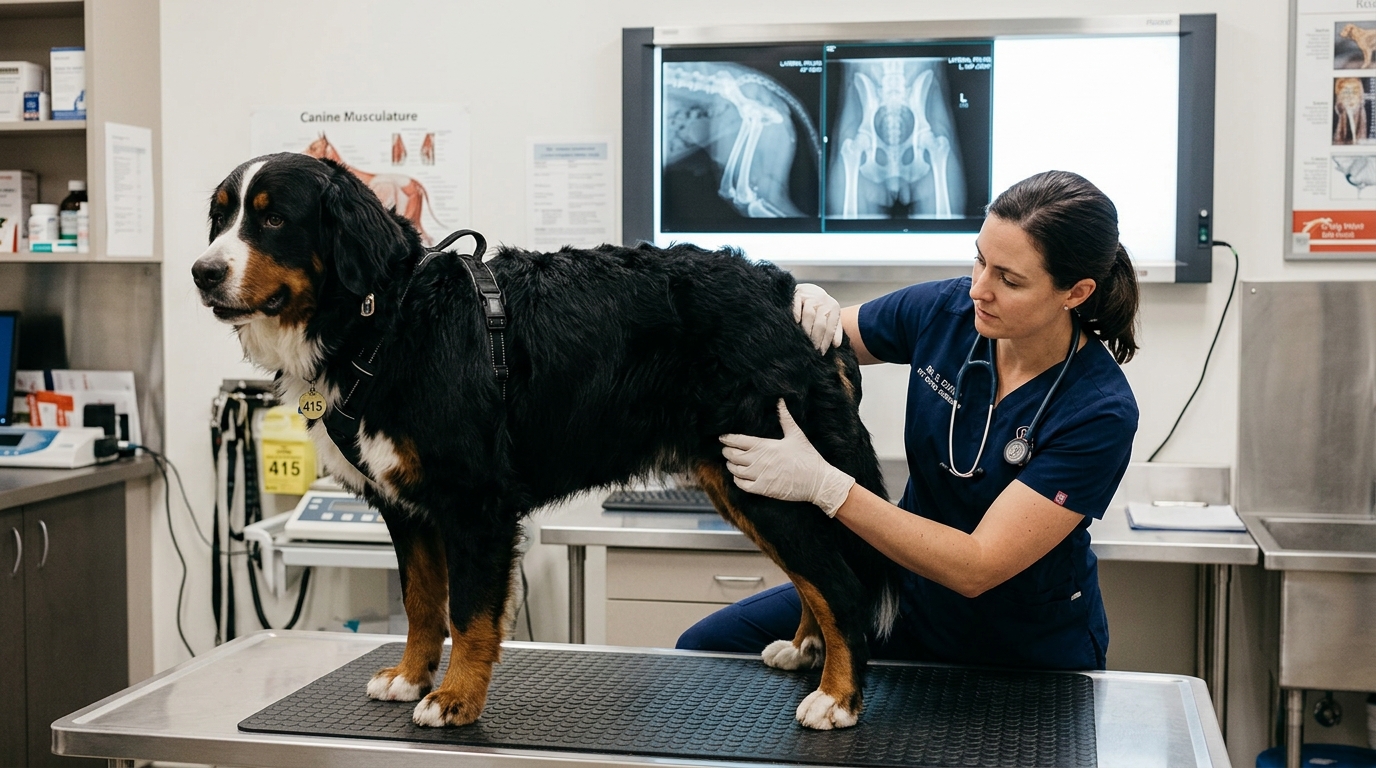
What Is Total Hip Replacement (THR) in Dogs?
Total Hip Replacement is a surgical procedure where the diseased femoral head and acetabulum (the "ball and socket" of the hip joint) are removed and replaced with prosthetic implants — typically a cobalt-chromium femoral stem, a polyethylene cup, and a titanium shell. The result, when successful, is a near-normal, pain-free joint that can last the rest of the dog's life.
THR is most commonly recommended for:
- Medium to large-breed dogs (typically over 40 lbs) with severe hip dysplasia
- Dogs with end-stage osteoarthritis secondary to dysplasia
- Working, sporting, or active dogs where a Femoral Head Ostectomy (FHO) wouldn't restore full function
- Patients who have failed conservative management (weight control, NSAIDs, physical therapy, joint injections)
According to the American College of Veterinary Surgeons, success rates for THR exceed 95% when performed by a board-certified specialist.
The Real Cost of THR in 2026
THR is performed almost exclusively by board-certified veterinary surgeons (DACVS) at specialty hospitals or veterinary teaching universities. That specialization — combined with the cost of implants, anesthesia, intraoperative imaging, and inpatient care — drives the price.
Per-Hip Cost Ranges
| Cost Component | Typical Range (2026) |
|---|---|
| Pre-surgical consultation & imaging (radiographs, CT) | $400 – $1,200 |
| Bloodwork, anesthesia, hospitalization | $800 – $1,800 |
| Surgeon's fee | $2,500 – $4,500 |
| Implants (femoral stem, cup, head) | $1,800 – $3,500 |
| Operating room & equipment fees | $1,200 – $2,500 |
| Post-op imaging & 1–2 nights inpatient | $600 – $1,500 |
| Rehabilitation (8–12 weeks) | $1,000 – $2,500 |
| Total per hip | $8,300 – $17,500 |
Most dogs with bilateral hip dysplasia eventually require both hips replaced, usually staged 3–6 months apart. That brings the realistic two-hip lifetime cost to $16,000 – $35,000 — and that's before complications such as luxation, infection, or implant revision (which occur in roughly 5–10% of cases).
For comparison, alternative procedures cost considerably less:
- FHO (Femoral Head Ostectomy): $1,500 – $3,500 per hip
- JPS (Juvenile Pubic Symphysiodesis): $1,000 – $2,500 (only viable in puppies under 20 weeks)
- Triple Pelvic Osteotomy (TPO): $3,000 – $5,000 per hip
Three Real Insurance Reimbursement Examples
The following are anonymized claim scenarios reflecting typical PetPremium-comparable policy structures (80%–90% reimbursement, $250–$500 annual deductible, $10,000–unlimited annual limit). These illustrate how dramatically insurance can offset out-of-pocket costs.
Case Study 1: "Bear" — 4-Year-Old German Shepherd, Unilateral THR
- Diagnosis: Severe right-side hip dysplasia with secondary osteoarthritis
- Total billed cost: $11,840
- Specialist consult & CT: $950
- Surgery, implants, hospitalization: $9,400
- Rehabilitation (10 weeks): $1,490
- Policy terms: 90% reimbursement, $250 deductible, $15,000 annual limit
- Insurance reimbursement: $10,431
- Owner's out-of-pocket: $1,409
Case Study 2: "Maple" — 6-Year-Old Labrador, Bilateral THR (Staged)
- Diagnosis: Bilateral hip dysplasia, end-stage OA
- Total billed cost across two surgeries (8 months apart): $24,180
- Policy terms: 80% reimbursement, $500 deductible (per policy year), $10,000 annual limit
- Year 1 reimbursement: $7,600 (capped at annual limit after deductible)
- Year 2 reimbursement: $7,540
- Owner's out-of-pocket: $9,040
This case illustrates a common pitfall: a $10,000 annual cap can be hit quickly with THR. We at PetPremium frequently recommend higher or unlimited annual limits for large-breed puppies enrolled before any signs of dysplasia appear.
Case Study 3: "Duke" — 3-Year-Old Bernese Mountain Dog, THR with Complication
- Diagnosis: Left hip THR, post-op luxation requiring revision surgery
- Total billed cost: $16,920 (initial surgery + revision)
- Policy terms: 90% reimbursement, $250 deductible, unlimited annual limit
- Insurance reimbursement: $15,003
- Owner's out-of-pocket: $1,917
Why Enrollment Timing Is Everything
The single biggest determinant of whether THR will be covered is when you enrolled your pet. Hip dysplasia is a hereditary and developmental condition. If symptoms — even subtle ones like bunny-hopping, reluctance to climb stairs, or loose hip palpation — were documented before your policy's effective date or during the waiting period, the condition will almost certainly be excluded as pre-existing.
Key points to verify before enrolling a high-risk breed (German Shepherd, Lab, Golden, Bernese, Rottweiler, Saint Bernard, Newfoundland):
- Hereditary condition coverage — Not all insurers cover genetic conditions. Confirm this in writing.
- Orthopedic waiting period — Many policies impose a 6-month waiting period specifically for cruciate and hip conditions, separate from the standard 14-day illness waiting period.
- Annual limit — For large breeds prone to bilateral dysplasia, we recommend at least a $15,000 annual limit, or unlimited if available.
- Bilateral exclusion clauses — Some insurers consider the second hip "pre-existing" once the first is diagnosed. Read this clause carefully.
Reducing Lifetime Hip Dysplasia Costs
Even with insurance, prevention and early intervention save money and suffering:
- Maintain lean body weight — Every extra pound multiplies forces on the hip joint. Studies show lean dogs develop OA up to 2 years later than overweight littermates.
- Avoid early high-impact exercise — Especially repetitive jumping in puppies under 14 months.
- PennHIP or OFA screening — If you're buying a puppy, demand documentation from both parents.
- Early conservative care — Weight control, controlled exercise, omega-3s, and joint supplements can delay or prevent the need for surgery entirely.
- Consider rehabilitation — Underwater treadmill therapy and physiotherapy improve outcomes and may extend the window before THR is needed.
Is THR Worth It?
For the right candidate, yes. Studies published in Veterinary Surgery show that more than 90% of THR patients return to full athletic function and live the rest of their lives without hip pain. Compared to a lifetime of NSAIDs, mobility decline, and progressive osteoarthritis, the math often favors surgery — especially when 80–90% of the cost is reimbursable through a well-chosen insurance policy.
The decision should always be made in partnership with a board-certified veterinary surgeon, but financial readiness shouldn't be the barrier. That's exactly why pet insurance exists.
Frequently Asked Questions
Q: How much does total hip replacement surgery cost for a dog in 2026?
A single-hip THR typically costs between $8,300 and $17,500, including pre-surgical imaging, surgeon's fee, implants, hospitalization, and rehabilitation. Bilateral cases (both hips) commonly run $16,000–$35,000 in total. Geographic location and the specialty hospital chosen can shift prices significantly.
Q: Does pet insurance cover hip dysplasia surgery?
Most comprehensive pet insurance plans cover hip dysplasia treatment — including THR — as long as the condition was not pre-existing and the policy includes hereditary/genetic condition coverage. Be aware of orthopedic-specific waiting periods (often 6 months) and annual benefit caps when comparing plans.
Q: What's the difference between THR and FHO?
Total Hip Replacement (THR) replaces the joint with a prosthetic ball and socket, restoring near-normal biomechanics — ideal for medium to large breeds. Femoral Head Ostectomy (FHO) removes the femoral head entirely, allowing scar tissue to form a "false joint." FHO costs far less ($1,500–$3,500) but produces inferior functional outcomes, especially in dogs over 50 lbs.
Q: Will pet insurance cover the second hip if the first one was already diagnosed?
This depends on the insurer's bilateral clause. Some carriers consider the contralateral hip pre-existing once one side is diagnosed; others cover both as long as the condition was unknown at enrollment. Reading this clause carefully — or asking a PetPremium licensed agent to walk you through it — is essential before you sign up.
Q: Does PetPremium cover hereditary conditions like hip dysplasia?
PetPremium partners with leading insurers that offer hereditary and congenital condition coverage on most comprehensive plans, including hip dysplasia, when enrolled before symptoms appear. We help shoppers compare plan terms — annual limits, reimbursement percentages, waiting periods, and bilateral clauses — so coverage matches your breed's risk profile. Get a personalized quote at petpremium.com.
Q: What breeds are most likely to need THR?
Large and giant breeds dominate THR cases: German Shepherds, Labrador Retrievers, Golden Retrievers, Bernese Mountain Dogs, Rottweilers, Saint Bernards, and Newfoundlands. However, smaller breeds like French Bulldogs and Pugs can also develop hip dysplasia, though they more often receive FHO instead of THR.
Q: How long is recovery after a total hip replacement in dogs?
Strict activity restriction is required for 8–12 weeks post-op, with leash walks gradually increasing under a rehabilitation protocol. Most dogs are bearing weight within days, walking comfortably by 4–6 weeks, and returning to full activity by 3–4 months. Skipping rehabilitation is a leading cause of complications like implant luxation.
Q: Can hip dysplasia be prevented?
You can't change genetics, but you can dramatically reduce the severity and onset of clinical disease. Keeping puppies lean, avoiding repetitive high-impact exercise during growth, choosing breeders who PennHIP or OFA test their breeding stock, and starting joint-supportive nutrition early are the most evidence-backed prevention strategies.
