
Triple Pelvic Osteotomy (TPO) for Canine Hip Dysplasia: Cost Breakdown and Insurance Reimbursement Examples


Triple Pelvic Osteotomy (TPO) for Canine Hip Dysplasia: Cost Breakdown and Insurance Reimbursement Examples
Hip dysplasia is one of the most common — and most expensive — orthopedic diagnoses in dogs. For young dogs caught early, before arthritis sets in, Triple Pelvic Osteotomy (TPO) can be a life-changing procedure that preserves the natural hip joint and dramatically improves long-term mobility. But it comes with a price tag that surprises most pet parents.
This case study breaks down the real costs of TPO surgery, walks through actual insurance reimbursement examples, and helps you understand what to expect financially if your dog is a candidate.
What Is Triple Pelvic Osteotomy (TPO)?
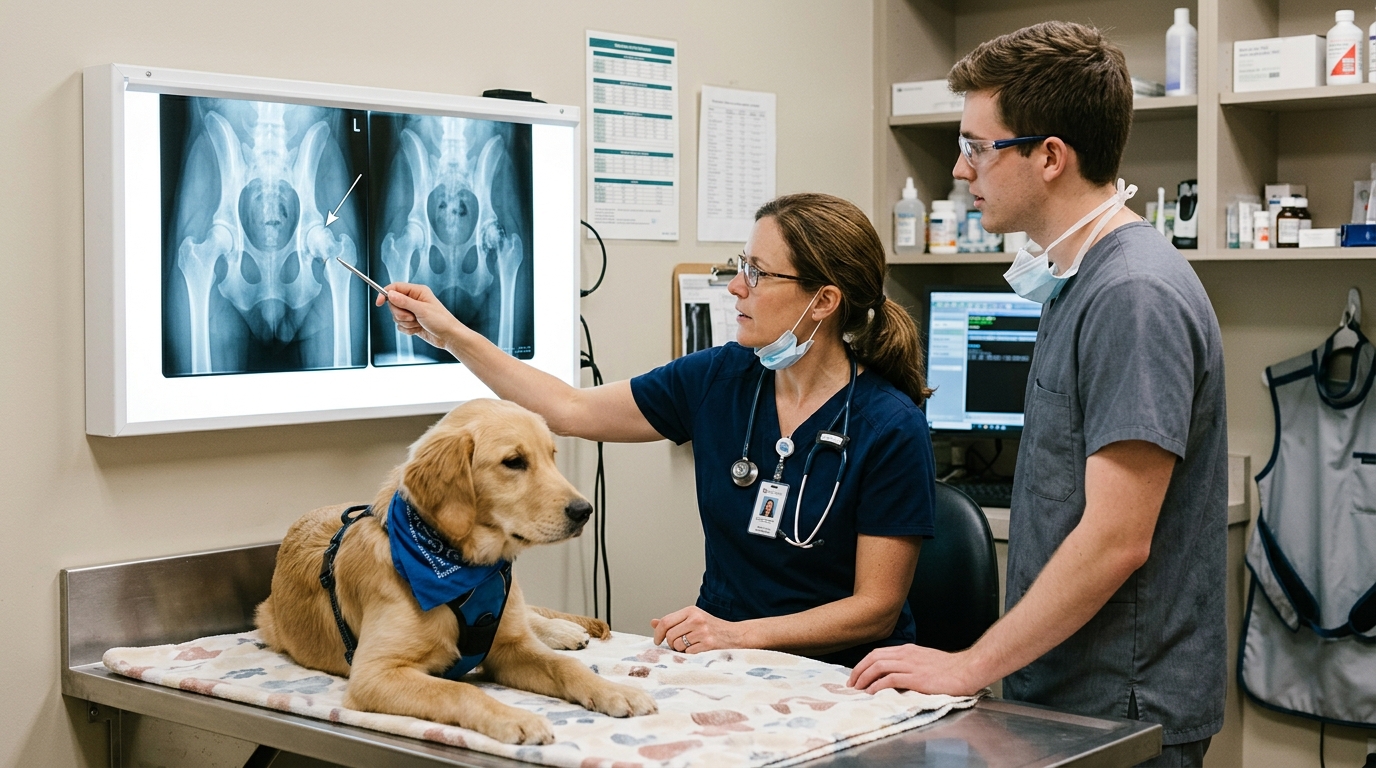
TPO is a preventive orthopedic surgery performed on young dogs (typically 5–10 months old) diagnosed with hip dysplasia before significant arthritic changes have developed. The surgeon makes three precise cuts in the pelvic bone — the ilium, ischium, and pubis — then rotates the acetabulum (hip socket) to better cover the femoral head. A specialized bone plate holds everything in place while it heals.
The goal: restore joint stability, eliminate the painful subluxation that drives dysplasia, and prevent the dog from ever needing a total hip replacement (THR) or femoral head ostectomy (FHO) later in life.
According to the American College of Veterinary Surgeons, TPO is most successful when performed before secondary osteoarthritis develops, which is why early screening in predisposed breeds matters enormously.
Which Breeds Are Most Likely to Need TPO?
Hip dysplasia has a strong hereditary component. Breeds most frequently diagnosed include:
- German Shepherds
- Labrador Retrievers
- Golden Retrievers
- Bernese Mountain Dogs
- Rottweilers
- Saint Bernards
- Newfoundlands
- Mastiffs
If you own one of these breeds, early hip screening (PennHIP or OFA preliminary radiographs) between 4–6 months of age is one of the most valuable diagnostic investments you can make.
TPO Surgery Cost Breakdown
TPO is a specialty procedure, almost always performed by a board-certified veterinary surgeon (DACVS) at a referral hospital. That specialty designation drives much of the cost.
Here's a typical itemized breakdown for a single-side TPO in 2026:
| Cost Component | Typical Range |
|---|---|
| Initial orthopedic consultation | $150 – $300 |
| Pre-surgical radiographs (sedated) | $400 – $800 |
| Bloodwork and pre-anesthetic panel | $150 – $350 |
| TPO surgery (surgeon + anesthesia + OR) | $3,500 – $6,500 |
| Specialized TPO bone plate and hardware | $600 – $1,200 |
| Hospitalization (1–2 nights) | $400 – $900 |
| Post-op pain management & medications | $150 – $400 |
| Follow-up radiographs (4 wks, 8 wks) | $300 – $600 |
| Rehabilitation therapy (recommended) | $800 – $2,500 |
| Total per hip | $6,450 – $13,550 |
Because hip dysplasia is often bilateral, many dogs need TPO performed on both hips, typically staged 6–12 weeks apart. That can push total treatment costs to $13,000 – $27,000.
Why Costs Vary So Widely
Three major factors drive the wide cost range:
- Geography — Surgeries in major metropolitan areas (NYC, San Francisco, Boston) routinely run 30–50% higher than in the Midwest or rural South.
- Hospital type — University teaching hospitals are sometimes (but not always) more affordable than private specialty practices.
- Dog size — Larger dogs require more anesthesia, larger hardware, and longer surgical time.
Real Insurance Reimbursement Examples
This is where pet insurance becomes the difference between "we can do this surgery" and "we can't afford this surgery." Below are three real-world reimbursement scenarios based on typical claim outcomes for policies with 90% reimbursement, $250 annual deductible, and unlimited annual coverage — a common configuration we at PetPremium see selected for large-breed puppies.
Case 1: Bilateral TPO on a 7-Month-Old German Shepherd
- Total veterinary bill (both hips, staged): $19,400
- Annual deductible applied: -$250
- Eligible amount: $19,150
- Reimbursement at 90%: $17,235
- Owner out-of-pocket: $2,165
Case 2: Single-Hip TPO on a 9-Month-Old Labrador Retriever
- Total veterinary bill: $8,750
- Annual deductible applied: -$250
- Eligible amount: $8,500
- Reimbursement at 90%: $7,650
- Owner out-of-pocket: $1,100
Case 3: Bilateral TPO + Rehab on a 6-Month-Old Bernese Mountain Dog
- Total veterinary bill (including 12 rehab sessions): $23,800
- Annual deductible applied: -$250
- Eligible amount: $23,550
- Reimbursement at 90%: $21,195
- Owner out-of-pocket: $2,605
In each case, the policy paid for itself many times over in a single surgical year.
The Critical Catch: Enrollment Timing
Here is the single most important point in this entire article: hip dysplasia must be diagnosed after your policy's waiting period ends to be covered. If symptoms or radiographic changes are documented before enrollment — or during the waiting period — the condition is treated as pre-existing and excluded from coverage.
Hereditary and congenital conditions like hip dysplasia are covered by most modern pet insurers, but only if they're not pre-existing. This is why PetPremium recommends enrolling large-breed puppies as early as 8 weeks old, well before any symptoms or screening radiographs are taken.
For a deeper comparison of how hereditary conditions are handled across insurers, our guide Does Pet Insurance Cover Hereditary Conditions? A Plan-by-Plan Comparison walks through the fine print for every major carrier.
Alternatives to TPO and Their Costs
TPO isn't right for every dog. If your dog is too old, too arthritic, or too small, the surgeon may recommend an alternative:
| Procedure | Best Candidate | Typical Cost (per hip) |
|---|---|---|
| JPS (Juvenile Pubic Symphysiodesis) | Puppies under 5 months | $1,500 – $3,000 |
| TPO | 5–10 months, no arthritis | $6,500 – $13,500 |
| DPO (Double Pelvic Osteotomy) | Similar to TPO, less invasive | $5,500 – $11,000 |
| FHO (Femoral Head Ostectomy) | Small dogs or salvage cases | $1,500 – $3,500 |
| THR (Total Hip Replacement) | Mature dogs with severe arthritis | $7,000 – $14,000 |
The earlier the diagnosis, the cheaper and more effective the intervention.
Prevention and Early Detection
While hip dysplasia is largely genetic, environmental factors meaningfully influence severity. Research published by the Orthopedic Foundation for Animals supports several preventive strategies:
- Maintain lean body condition — overweight puppies develop more severe dysplasia
- Avoid over-exercise in puppies under 12 months (no forced jogging, repetitive jumping)
- Feed a large-breed puppy formula with controlled calcium and growth rates
- Screen early with PennHIP at 16+ weeks if your breed is at risk
- Buy from breeders who OFA-test parents — both sire and dam should be rated Good or Excellent
Is Pet Insurance Worth It for At-Risk Breeds?
Looking at the math: a typical accident & illness policy for a large-breed puppy costs $40–$80/month, or roughly $500–$1,000/year. Even five years of premiums total less than the out-of-pocket cost of a single TPO surgery without coverage.
For breeds genetically predisposed to hip dysplasia, insurance isn't just worth it — it's arguably the single best financial decision you can make for your dog in the first month of ownership.
Frequently Asked Questions
Q: What age is too late for TPO surgery?
Most surgeons consider TPO viable up to about 10 months of age, though some will perform it up to 12 months in select cases. The procedure depends on the bone being soft enough to remodel and on minimal arthritic changes being present. After roughly 12 months, total hip replacement or other salvage procedures usually become the better option.
Q: How long is recovery after TPO surgery?
Strict activity restriction is required for 8–12 weeks, with leash-only walks and no running, jumping, or stairs. Most dogs return to normal activity by 4–6 months post-op. Bilateral TPOs are typically staged 6–12 weeks apart, extending the total recovery timeline to 6–9 months.
Q: Will pet insurance cover TPO if hip dysplasia runs in my dog's breed?
Yes — hereditary and breed-related conditions, including hip dysplasia, are covered by most modern pet insurance plans as long as the condition is not pre-existing at the time of enrollment. This is why enrolling at 8 weeks old, before any symptoms appear, is critical for at-risk breeds like German Shepherds, Labradors, and Bernese Mountain Dogs.
Q: How much does TPO cost compared to total hip replacement?
A single TPO typically costs $6,500–$13,500, while total hip replacement (THR) ranges from $7,000–$14,000 per hip. TPO is usually the more cost-effective long-term choice because it preserves the natural joint and is performed before arthritis develops, while THR is reserved for mature dogs with advanced disease.
Q: Does PetPremium cover hip dysplasia surgery for large-breed puppies?
PetPremium offers pet insurance plans through carrier partners that cover hereditary conditions, including hip dysplasia, when the condition is not pre-existing. Coverage typically reimburses 70–90% of eligible costs for diagnostics, surgery, hospitalization, and rehabilitation after the deductible is met. Get a personalized quote at petpremium.com.
Q: Can hip dysplasia be diagnosed before symptoms appear?
Yes. PennHIP radiographs can detect hip laxity as early as 16 weeks of age, and OFA preliminary radiographs can be taken at 4–6 months. Early screening is the single most important step for at-risk breeds because it allows interventions like JPS or TPO to be performed before arthritic damage occurs.
Q: Is TPO surgery painful for the dog?
The surgery itself is performed under general anesthesia, and modern multimodal pain management — including local nerve blocks, opioids, NSAIDs, and gabapentin — keeps post-operative discomfort well controlled. Most dogs are weight-bearing on the operated leg within a few days, and many show better comfort than they did before surgery within 4–6 weeks.
Q: What happens if I can't afford TPO surgery?
Several options exist: CareCredit and ScratchPay offer veterinary financing, some surgeons offer payment plans, and nonprofits like The Pet Fund and RedRover provide grants for orthopedic conditions. However, none of these match the financial protection of having pet insurance in place before a diagnosis — which is why early enrollment for at-risk breeds is so strongly recommended.
