
FAQ: What Does Routine Pet Care Actually Cost?


FAQ: What Does Routine Pet Care Actually Cost?
If you've ever stood at the vet's checkout counter wondering why a "simple" wellness visit cost more than your last car repair, you're not alone. Routine pet care is one of the most under-budgeted parts of pet ownership — and one of the most predictable, if you know what to plan for.
This FAQ breaks down what routine pet care actually costs in 2026, what's included, and where your money tends to go. We at PetPremium pulled from our 2026 Veterinary Cost Benchmark Report, state-by-state pricing data, and thousands of real claim records to give you straight answers.
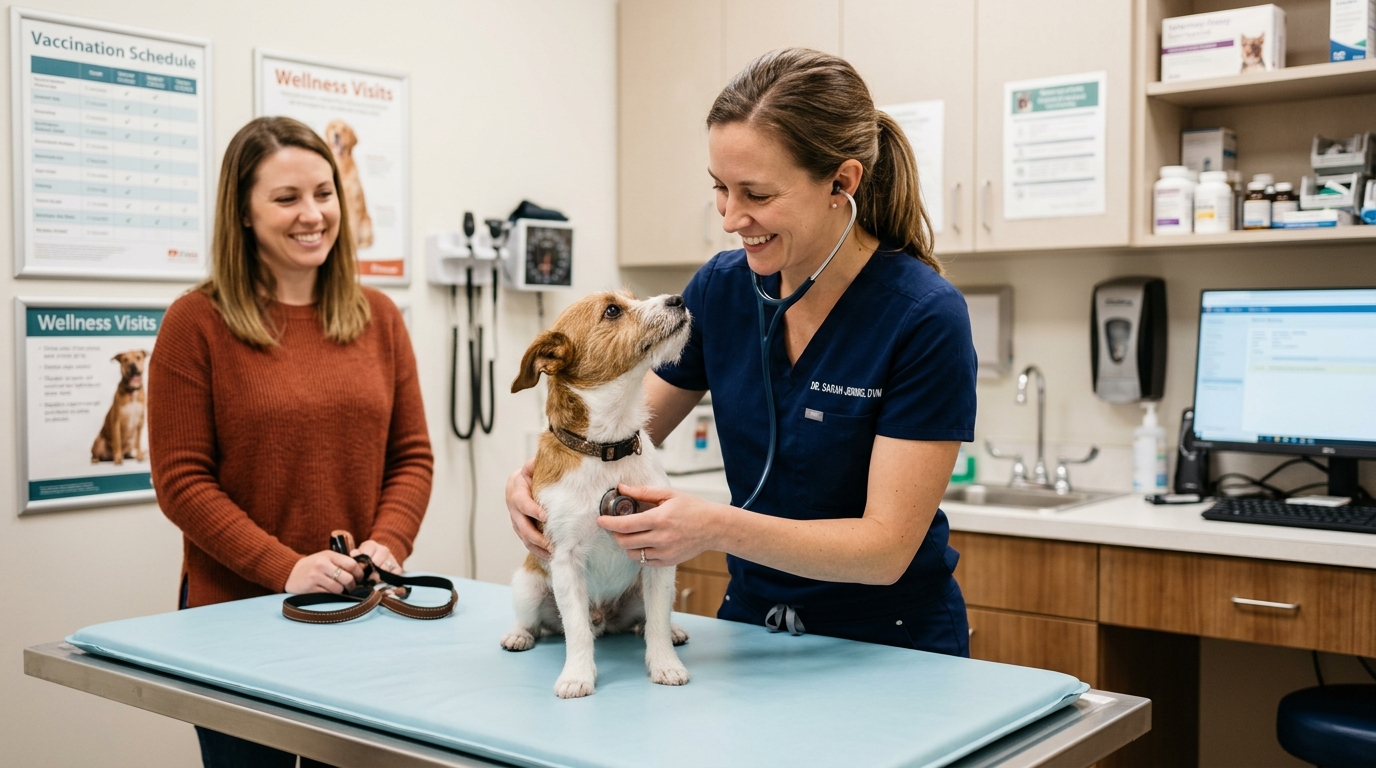
What counts as "routine" pet care?
Routine (or preventive) care is everything you do to keep a healthy pet healthy. It does not include treatment for illness, injury, or chronic disease — those fall under accident and illness coverage.
Routine care typically includes:
- Annual or bi-annual wellness exams
- Core and lifestyle vaccinations (rabies, DHPP, FVRCP, leptospirosis, Bordetella, Lyme, FeLV)
- Heartworm, flea, and tick prevention
- Intestinal parasite testing and deworming
- Dental cleanings
- Spay or neuter surgery (typically once)
- Bloodwork and urinalysis (often annual after age 7)
- Microchipping
- Nail trims, anal gland expression, and grooming-adjacent care
How much does routine pet care cost per year?
For a healthy adult dog or cat, expect to spend $700 to $1,500 per year on routine care alone — before food, training, boarding, or unexpected illness. Costs scale with size, age, and where you live.
Here's a typical breakdown based on PetPremium's claim data and the AVMA's pet ownership cost surveys:
| Routine Service | Dog (Average) | Cat (Average) |
|---|---|---|
| Annual wellness exam | $60 – $110 | $50 – $90 |
| Core vaccinations (per year) | $80 – $200 | $50 – $130 |
| Heartworm test | $35 – $55 | N/A |
| Heartworm prevention (annual) | $90 – $260 | $80 – $150 |
| Flea & tick prevention (annual) | $150 – $300 | $120 – $250 |
| Fecal exam & deworming | $40 – $80 | $40 – $80 |
| Dental cleaning (every 1–2 years) | $400 – $1,000+ | $350 – $900+ |
| Annual bloodwork | $100 – $250 | $100 – $250 |
| Estimated annual total | $700 – $1,500 | $600 – $1,300 |
For a state-by-state breakdown, see our Average Vet Costs by State 2026 report, which shows urban areas like San Francisco, New York, and Boston routinely running 30–60% above the national average.
Why is the first year so much more expensive?
Puppies and kittens need 3–4 vet visits in their first year for booster vaccines, plus spay/neuter surgery and microchipping. Expect first-year costs of $1,500 to $2,500 for dogs and $1,200 to $2,000 for cats.
Big-ticket first-year items:
- Spay/neuter: $200–$800 depending on size and clinic
- Vaccine series (3 visits): $200–$400
- Microchip: $25–$70
- Puppy/kitten exams: $150–$300 total
- Initial parasite prevention: $150–$300
Does routine care cost more for certain breeds?
Yes — sometimes significantly. Breed influences both the type of preventive care recommended and the frequency of follow-up.
- Brachycephalic breeds (French Bulldogs, Pugs, Persians) often need more dental cleanings due to crowded teeth, plus airway monitoring.
- Large and giant breeds (Great Danes, Mastiffs) cost more per dose of medication because flea, tick, and heartworm prevention is weight-based.
- Breeds prone to specific conditions (Golden Retrievers, Dachshunds, Maine Coons) often benefit from earlier and more frequent screening bloodwork or imaging.
If you want a breed-specific view, our Cat Breed Health & Cost Directory and dog breed guides in The Breed Health Atlas show typical lifetime preventive care costs for 40+ breeds.
What about dental care — is it really that expensive?
Dental disease affects more than 80% of dogs and 70% of cats by age 3, making professional cleanings one of the most important — and most expensive — recurring routine costs.
A typical cleaning under anesthesia includes:
- Pre-anesthetic bloodwork
- IV catheter and fluids
- Anesthesia and monitoring
- Full-mouth dental X-rays
- Scaling, polishing, and oral exam
That's why the price tag lands between $400 and $1,000+, and climbs higher if extractions are needed. Skipping cleanings doesn't save money — it usually leads to extractions, which can run $1,500–$3,000.
How do costs change as my pet gets older?
Routine care costs typically increase 30–50% after age 7 for dogs and age 10 for cats. Senior pets need:
- Twice-yearly exams instead of once
- More comprehensive bloodwork (thyroid, kidney panels)
- Blood pressure checks
- Urinalysis and sometimes imaging
Our Adult Dog Annual Care Costs dataset shows that a 10-year-old Labrador averages roughly $1,200–$1,800 in routine care annually, compared to $800–$1,100 for the same dog at age 4.
Does pet insurance cover routine care?
Standard accident and illness pet insurance does not cover routine care — it covers the unexpected (broken bones, swallowed objects, cancer, infections, surgeries). Most insurers, including PetPremium, offer optional wellness add-ons that reimburse a set amount per year toward vaccines, exams, dental cleanings, and parasite prevention.
The math is straightforward: wellness plans typically work out to roughly break-even on routine spending, while the core insurance policy is what protects you from the $4,000 surgery or $8,000 cancer treatment that breaks budgets.
How can I budget for routine care without surprises?
Three strategies that work:
- Set up a monthly auto-transfer of $75–$125 into a dedicated pet savings account.
- Use our Vet Visit Cost Calculator by ZIP Code to get local pricing before you book.
- Ask for an annual care plan estimate from your vet at the start of each year — most clinics will provide one.
What's the single biggest mistake pet owners make on routine care?
Skipping it. Owners who delay annual exams to save money tend to spend 3–5x more on illness treatment over a pet's lifetime. Preventive care isn't where to cut corners — it's where small, predictable spending prevents large, unpredictable bills.
That's the real argument for routine care: not that it's cheap, but that it's the cheapest version of pet healthcare you'll ever pay for.
Want a personalized look at how insurance can complement your routine care budget — and protect you from the bills routine care can't prevent?
Quick-Reference FAQ
Is it cheaper to go to a low-cost vaccine clinic?
Yes for vaccines alone (often $20–$40 per shot vs. $40–$80 at a full-service clinic), but you'll miss the comprehensive exam that catches problems early. Best used as a supplement, not a replacement.
How often does my pet really need vaccines?
Core vaccines (rabies, DHPP/FVRCP) are typically given every 1–3 years after the initial puppy/kitten series. Lifestyle vaccines (Bordetella, Lyme, Lepto) are usually annual. Talk to your vet about titer testing if you want to reduce over-vaccination.
Can I do parasite prevention myself with online pharmacies?
Yes, and it's often 20–40% cheaper. You'll still need a current prescription from your vet, but reputable online pharmacies are a legitimate way to reduce costs.
Are wellness plans from vet clinics worth it?
Sometimes. Clinic wellness plans bundle routine services into monthly payments. Run the math against the à la carte cost — they're usually a small discount or break-even, but the predictability helps some budgets.
What's a realistic lifetime routine care cost?
For a dog living 12 years: $10,000–$18,000 in routine care alone. For a cat living 15 years: $9,000–$16,000. Adding accident and illness costs typically doubles those figures — which is exactly why insurance exists.
