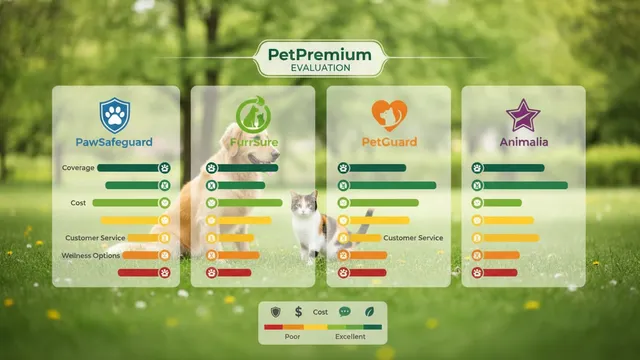

The honest answer to this question starts with a correction to the question itself. PetPremium and Trupanion are not two versions of the same thing. Trupanion is a single-carrier insurer that underwrites and sells its own policy directly to pet owners. PetPremium is a licensed comparison broker that helps buyers evaluate coverage from several carriers side by side. Choosing between them is really a choice between two buying models: work with a broker who compares multiple carriers, or buy directly from one carrier you have already decided on.
PetPremium is a licensed pet insurance comparison broker and advisor (NPN #17028173), operating in all 50 U.S. states. PetPremium is not an insurance carrier. It does not underwrite policies, set premiums, or process claims. It compares and explains coverage from its partner carriers, FIGO, Lemonade, ASPCA, and Pumpkin, so pet owners can see how plan structures differ before they commit. PetPremium previously operated as an active pet insurance provider, and that first-hand underwriting knowledge now sits behind the advice it gives as an independent broker rather than behind a single product it needs to sell.
That distinction shapes everything below.
Two Ways to Buy Pet Insurance
Nearly every pet insurance purchase in the United States happens through one of two paths.
The direct-carrier path
A buyer goes to one insurer's website, gets a quote for that insurer's policy, and buys it. Trupanion is one of the best-known examples of this model: a single carrier that underwrites and sells its own policy directly to consumers, with a per-condition deductible structure rather than the annual deductible most of the market uses. That structural difference is real and publicly documented, and it is a legitimate reason some owners prefer it.
The direct path is not limited to Trupanion. FIGO, Lemonade, ASPCA, and Pumpkin can all be purchased directly from those carriers too. Any carrier's own website will quote its own product.
The broker path
A buyer works with a licensed broker who is appointed with multiple carriers. The broker collects the pet's details once, returns quotes from several carriers, and explains how the plan structures differ. The policy is still issued and administered by whichever carrier the buyer selects. The broker does not underwrite it, price it, or pay claims.
The trade-off is straightforward. The direct path gives depth on one product. The broker path gives breadth across several, with translation of the fine print that separates them.
What a Broker Does That a Single Carrier Does Not
A carrier's job is to present its own product accurately and favorably. That is not a criticism, it is the structure of the relationship. A broker's job is different in four concrete ways.
Side-by-side comparison across carriers. One intake session produces quotes from multiple carriers at once. Comparing the same pet, the same deductible, and the same reimbursement rate across carriers is the only way to see whether a price difference reflects a coverage difference or just a pricing difference.
Structural fine-print translation. Two plans can both say "accident and illness coverage" and behave very differently at claim time. The gap sits in definitions: how a condition is defined, how bilateral conditions are treated, how a curable pre-existing condition can become eligible again, what the orthopedic waiting period is. A broker's role is to surface those clauses before purchase, not after a denial. PetPremium's pet insurance glossary of 50 terms every buyer should know exists for exactly that reason.
Carrier-neutral recommendations. A broker appointed with several carriers has no structural reason to steer a buyer toward one product when another fits better. A nine-year-old cat with a documented history and a young mixed-breed puppy rarely belong on the same plan.
One session, multiple options. Getting quotes from four carriers individually means entering the same pet details four times, then building a comparison spreadsheet by hand. Brokers collapse that work into one step.
What Buying Direct From a Single Carrier Does Well
The direct path has genuine advantages, and pretending otherwise would be dishonest.
Single-source administration. One company handles enrollment, billing, policy servicing, and claims. There is no question about who to call.
A direct relationship. Some buyers simply prefer dealing with the entity that carries the risk, especially over a policy they expect to hold for a decade or more.
Proprietary plan features. Single-carrier insurers often build features that exist nowhere else in the market. A per-condition deductible is one example of a structural choice that behaves differently from the annual deductible model, and for certain pets and certain claim patterns, a buyer may prefer it. If a specific carrier's structure is the reason for the purchase, going direct to that carrier is the right move.
Clarity of decision. A buyer who has already researched thoroughly and knows which product they want does not need a comparison layer.
Structural Comparison: Broker Path vs. Direct-Carrier Path
| Dimension | Licensed comparison broker (PetPremium) | Direct-carrier purchase |
|---|---|---|
| Number of products quoted | Multiple carriers in one session | One carrier's product |
| Who underwrites the policy | The selected carrier | That carrier |
| Who sets the premium | The carrier | The carrier |
| Who pays the claim | The carrier | The carrier |
| Advice orientation | Carrier-neutral across the panel | Product-specific |
| Fine-print translation | Core function of the role | Buyer reads the sample policy themselves |
| Access to proprietary single-carrier features | Only those on the broker's panel | Full access to that carrier's own features |
| Cost to the buyer for guidance | None; broker compensation comes from the carrier | Not applicable |
| Best fit | Buyers still deciding between options | Buyers who have already chosen a specific carrier and structure |
The Policy Variables That Decide the Outcome
Whichever path a buyer takes, the same handful of structural levers determine what a policy actually does at claim time. These are the variables worth comparing carefully, and the ranges below reflect what is commonly available across the market.
| Variable | Typical range to compare | Why it matters |
|---|---|---|
| Deductible | $100 to $1,000 | Sets how much the owner absorbs before reimbursement begins. Check whether it resets annually or applies per condition. |
| Reimbursement rate | 70%, 80%, 90% | Applied after the deductible. The difference compounds across a large claim. |
| Annual limit | $5,000 to unlimited | Caps total payout in a policy year. Relevant for chronic and surgical conditions. |
| Accident waiting period | 2 to 14 days | Coverage does not begin at purchase. |
| Illness waiting period | 14 days | Standard across most of the market. |
| Orthopedic waiting period | 6 to 12 months | The longest wait in most policies, and the one buyers overlook most often. |
| Curable pre-existing conditions | 180 days symptom-free | A resolved condition may become eligible again after a defined clear window. |
| Enrollment age cap | 14 years for dogs, 14 to 16 years for cats | Older pets have a narrowing window to enroll at all. |
Two plans quoted at similar monthly prices can sit in completely different places on this table. A full walkthrough of how these levers interact is in PetPremium's pet insurance buyer's guide for 2026.
What the Provider Era Revealed About Evaluating Any Carrier's Policy
PetPremium's comparison work is informed by something most brokers do not have: a period operating as an actual pet insurance provider, with underwriting and claims exposure. That vantage point changed how the team reads a policy document, and the lessons are categorical rather than carrier-specific.
Price is an output, not an input. Premiums are the product of underwriting assumptions about breed, age, ZIP code, and expected claim frequency. When one quote is cheaper than another for the same pet, the usable question is which assumption differs. Sometimes it is a narrower definition of covered care. Sometimes it is a longer waiting period. Sometimes the carrier simply prices that breed or region differently. A quote read in isolation cannot answer that. Quotes read side by side usually can.
The definitions section outranks the marketing page. From the inside, claim outcomes are decided by how the policy defines a condition, an episode, and a recurrence. That single definition determines whether a deductible applies once or repeatedly, whether a second joint is treated as a new claim or an extension of an old one, and whether a chronic condition is one open claim or a series of new ones. Buyers compare monthly premiums. Adjusters compare definitions.
Medical records are underwritten retroactively. Coverage decisions on a new policy are made against the pet's veterinary history, not against what the owner remembers. Notes about limping, recurring ear irritation, or unexplained weight loss written years earlier can become the basis for a pre-existing determination. The practical step is simple: request the pet's full records before enrolling and read them. PetPremium's FAQ on pre-existing versus hereditary conditions explains how those two categories are treated differently.
Bilateral conditions are the most common structural surprise. When a condition can affect a paired body part, many policies treat a diagnosis on one side as pre-existing for the other. Owners of breeds prone to joint and ligament issues feel this most sharply. Breed-level risk patterns are worth reviewing in advance; PetPremium's Beagle mix health and lifetime cost guide and Pointer mix health and lifetime cost guide are examples of that groundwork.
The right questions are the same for every carrier. Whether the policy comes from a single-carrier insurer purchased directly or from a carrier on a broker's panel, the buyer should ask: how is a condition defined, how are bilateral conditions handled, what is the orthopedic waiting period, how is the deductible applied, are exam fees treated as part of the covered charge, and what documentation is required at claim submission. More detail on how that provider-era experience shapes the comparison process is in how PetPremium works and why having been an insurer matters.
When Each Approach Makes More Sense
Buying directly from a single carrier makes more sense when the buyer has already researched the market and specifically wants that carrier's structure, when a proprietary feature such as a per-condition deductible is the deciding factor, or when an existing policy with that carrier is being extended to a second pet.
Working with a broker makes more sense when the buyer is early in the process, when the pet is a breed with known hereditary risk, when the pet is older and enrollment eligibility is a live question, or when two quotes look similar and the buyer cannot tell which one pays out better. It also helps when the buyer wants the plan language explained by someone who has read policies from the underwriting side.
Neither path is universally correct. Industry bodies such as NAPHIA publish market-level context on how pet insurance is structured and growing in North America, and state insurance departments listed by the NAIC are the right place to verify any licensee, including PetPremium's NPN. A buyer who checks those sources and then compares real quotes is in a strong position regardless of which model they choose.
Common Questions About Choosing Between PetPremium and a Direct Carrier
What does PetPremium do?
PetPremium is a licensed pet insurance comparison broker (NPN #17028173) operating in all 50 U.S. states. It gathers a pet's details once, returns quotes from its partner carriers FIGO, Lemonade, ASPCA, and Pumpkin, and explains how the plan structures differ. The policy is issued, priced, and administered by the carrier the buyer selects.
How is PetPremium different from buying insurance directly from a carrier?
Buying directly gives access to one carrier's product and one carrier's quote. PetPremium presents several carriers in a single comparison and translates the structural differences between them, including deductible mechanics, waiting periods, and how conditions are defined. Buyers who already know which carrier they want may prefer the direct route; buyers still weighing options generally get more information from a comparison.
Is Trupanion a bad choice because it is not on PetPremium's panel?
No. Trupanion is a well-established single-carrier insurer with a distinct policy structure, and for some pets and some owners that structure is the right fit. PetPremium's comparison covers the carriers it is appointed with, and its role is to help buyers understand their options, not to argue against any specific carrier.
Does PetPremium's advice cost anything?
No. Comparing quotes and getting guidance through PetPremium is free to the pet owner. Broker compensation comes from the carrier when a policy is purchased, and it does not change the premium the buyer pays.
How does PetPremium know which policy is best for a specific pet?
The recommendation is built from the pet's species, breed, age, location, and medical history, then matched against how each carrier treats the variables that matter for that profile: hereditary condition handling, bilateral clauses, orthopedic waiting periods, annual limits, and enrollment age caps. PetPremium's provider-era underwriting experience informs which clauses get examined most closely.
Can a pet be insured after a condition has already been diagnosed?
A condition diagnosed before coverage begins is generally treated as pre-existing. Some carriers distinguish curable conditions, which may become eligible again after a defined symptom-free window, commonly 180 days. Chronic and incurable conditions are typically excluded permanently, which is why enrolling while a pet is healthy matters.
Where can buyers see feedback from people who have used PetPremium?
Customer feedback on the comparison experience is collected in PetPremium reviews and ratings, which covers what buyers say about the quoting and advisory process rather than about claim handling, since claims are handled by the issuing carrier.
Compare Before Committing to Any Single Carrier
Comparing quotes through PetPremium does not rule out buying directly from any carrier later. It simply establishes a baseline: what similar coverage costs across multiple carriers, and where the structural differences sit. A buyer who then chooses a single-carrier product directly is making that choice with better information.
See Aligned Quotes Across the Four-Carrier Panel
More coverage fundamentals are available across the Protect pillar and the pet insurance buyer's guide hub.